Coming Soon - Moth Conservation
Moths In Decline Part 1
29/12/2025
Concerning Loss of Moths
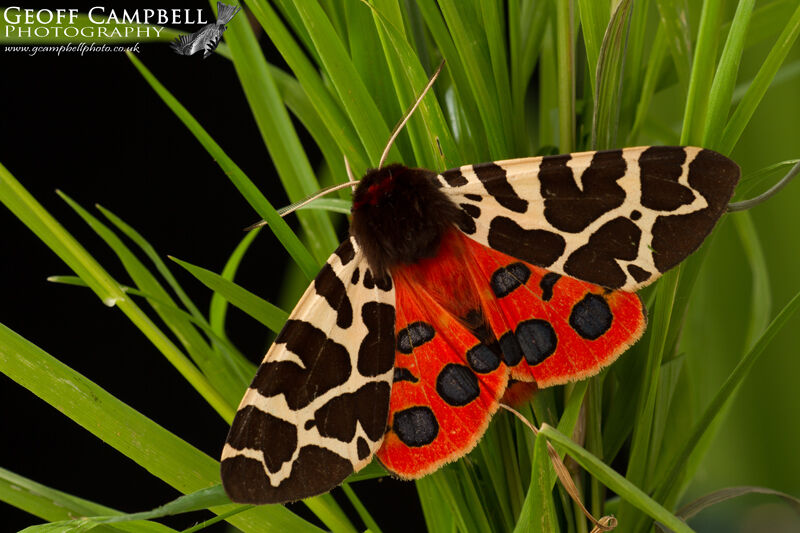
The population of the stunning Garden Tiger collapsed by over 90% since the late 1960s. Mild, wet winters and warm springs are believed to have impacted larval survival
Having seen how special and important moths are it is deeply concerning that many long term studies have produced strong evidence that many of our moths are in trouble. A decrease of 33% in overall numbers have been found in across Britain between 1968 and 2017, with a number of species going extinct. A Scottish study found that moth abundance declined by 46% between 1990 and 2018, with the situation worsening in recent years.
Large declines have been recorded elsewhere in Europe, and even within nature reserves. Rarely do we see the windscreens of our cars covered in dead insects after driving on warm summer nights, which was a common experience in the past decades. Sadly it appears that moths are a good barometer for the health of other insect groups, and those species which rely upon them.
In Ireland the “Red list” of larger moths produced in 2016 determined that more than ten species of moths are regionally extinct and close to twenty are critically endangered. Many of the species we have in North Antrim are those experiencing the greatest population declines. Even our “common” species are much less common than in the past.
It would be wrong though to assume that these declines are only a recent phenomenon, simply because that is when reliable datasets began. In North Antrim the Belted Beauty was formally a resident species, around Ballycastle, but was lost in the late 19th or early 20th Century and the Portland moth was last recorded from Portrush and Portballintrae in 1903.

It is not just changes in numbers of moths that is of concern, but also changes in their distribution. Some species are moving north, some to high altitudes and others are retreating in their range to core areas.
While the reasons for the rapidly changing populations and distribution in our moths is not fully understood. a number of likely causes have been identified for these declines, though the action of humans appear to be the common link. These actions have been catastrophic not only for the moths, but also the web of life which they support.
Large declines have been recorded elsewhere in Europe, and even within nature reserves. Rarely do we see the windscreens of our cars covered in dead insects after driving on warm summer nights, which was a common experience in the past decades. Sadly it appears that moths are a good barometer for the health of other insect groups, and those species which rely upon them.
In Ireland the “Red list” of larger moths produced in 2016 determined that more than ten species of moths are regionally extinct and close to twenty are critically endangered. Many of the species we have in North Antrim are those experiencing the greatest population declines. Even our “common” species are much less common than in the past.
It would be wrong though to assume that these declines are only a recent phenomenon, simply because that is when reliable datasets began. In North Antrim the Belted Beauty was formally a resident species, around Ballycastle, but was lost in the late 19th or early 20th Century and the Portland moth was last recorded from Portrush and Portballintrae in 1903.
Two charismatic moths lost from North Antrim by the early 20th Century - Belted Beauty and Portland Moth
It is not just changes in numbers of moths that is of concern, but also changes in their distribution. Some species are moving north, some to high altitudes and others are retreating in their range to core areas.
While the reasons for the rapidly changing populations and distribution in our moths is not fully understood. a number of likely causes have been identified for these declines, though the action of humans appear to be the common link. These actions have been catastrophic not only for the moths, but also the web of life which they support.